

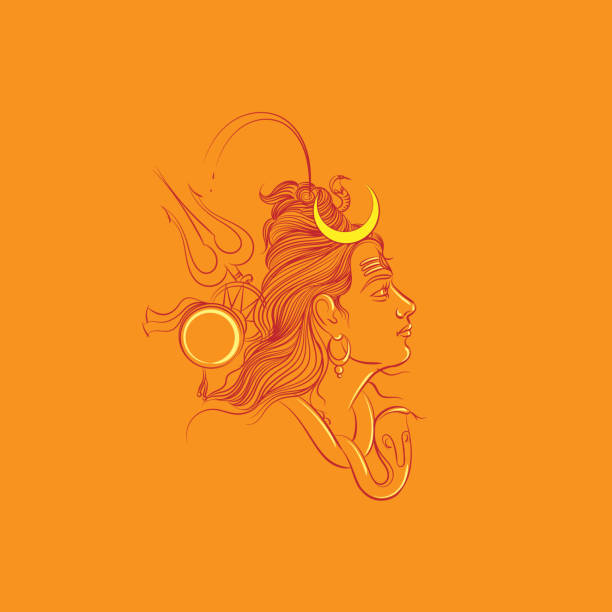
Mahāśivarātri 2026 in New Zealand
Rudram, the Lingam, and the Night of Inner Illumination
Mahāśivarātri—the Great Night of Lord Śiva—is not merely a festival. It is a sacred pause in time. It is the night when sound becomes silence, ritual becomes meditation, and the restless mind is invited to rediscover its eternal source.
For devotees in New Zealand, Mahāśivarātri in 2026 will be observed on:
Sunday evening, 15 February 2026 – early hours of Monday, 16 February 2026 (NZDT)
For Auckland, New Zealand (NZDT, UTC+13), the Tithi details are as follows:
Krishna Chaturdashi Begins: 00:34 AM – Monday, 16 February 2026
Krishna Chaturdashi Ends: 1:04 AM—Tuesday, 17 February 2026
Although Chaturdashi begins after midnight on Monday, 16 February 2026, by the civil calendar, the Mahāśivarātri vigil is observed on the night that contains Nishita Kaal while Chaturdashi prevails.
Since Chaturdashi is active during the sacred midnight window following sunset on Sunday, 15 February 2026, the vigil is therefore observed beginning Sunday evening, 15 February 2026 (NZDT)
Devotees fast on Sunday, 15 February 2026, remain in prayer and vigil through the night, and conclude the fast after sunrise on Monday, 16 February 2026.
Note: Due to New Zealand’s advanced timezone (UTC+13), the sacred midnight of Mahāśivarātri occurs after midnight by the civil calendar, yet spiritually belongs to the vigil that begins on the evening of 15 February 2026.
Nishita Kaal (Sacred Midnight Window)
In Vedic tradition, Nishita Kaal is not simply 12:00 midnight by the clock. It is the precise middle portion of the night, calculated from local sunset to the following sunrise.
The total duration of the night is divided into fifteen equal segments known as Muhurtas. The eighth Muhurta is called Nishita Kaal—the still point of the night, when spiritual vibrations are considered most subtle and powerful.
For Auckland in 2026, Nishita Kaal falls approximately:
1:13 AM – 1:55 AM (Monday, 16 February 2026 NZDT)
Mahāśivarātri is observed when Chaturdashi Tithi prevails during Nishita Kaal. Since Chaturdashi is active during this window, the Mahāśivarātri observance is correctly aligned with the night of 15–16 February 2026 in New Zealand.
The Spiritual Meaning of Mahāśivarātri
Mahāśivarātri symbolises the still point of consciousness—the unmoving center around which the changing universe revolves. The Upanishads declare:
“तदेजति तन्नैजति”
Tad ejati tan naijati
“It moves, and It moves not.”
(Īśa Upanishad)
The Absolute is both dynamic and unmoving—the silent witness behind all experience.
Tradition speaks of Lingodbhava—the manifestation of Śiva as a boundless pillar of light without beginning or end. Neither Brahmā nor Viṣṇu could find its source. This is not merely mythology; it is metaphysics expressed poetically. The Absolute cannot be grasped by intellect because it is the very ground of the intellect.
On this night, worship becomes alignment. The devotee does not merely stand before Śiva—the devotee stands within the field of pure awareness that Śiva symbolises.
The Śiva Lingam—Symbol of the Infinite
The Śiva Lingam is not an ordinary idol. It represents:
-
The cosmic axis connecting heaven and earth
-
The formless Absolute beyond name and shape
-
The silent witness within the heart
Its smooth, oval form signifies infinity. The circular base represents creative energy. Together they express the union of stillness and dynamism—consciousness and creation.
To pour water over the Lingam is to symbolically wash away ignorance. To offer Bilva leaves is to offer the purified mind. To sit before it in silence is to sit before one’s own Self.
Rudram—The Heart of the Night
The chanting of the Śrī Rudram from the Yajurveda is central to Mahāśivarātri. Rudram invokes the Divine in every form—in wind and fire, in mountains and rivers, in strength and humility, and in destruction and renewal. It teaches that Śiva pervades all existence.
When we chant:
नमः शिवाय च शिवतराय च
Namah Śivāya cha Śivatarāya cha
“Salutations to the Auspicious One, and to the One who is ever more auspicious.”
Each “Namah” — “I bow” — dissolves ego. The repetition purifies the inner vibration. The mind softens. The heart becomes receptive.
The Namakam bows in surrender.
The Chamakam invokes completeness and divine fullness.
Together, they purify and uplift. They echo the Upanishadic declaration:
“पूर्णमदः पूर्णमिदम्…”
“That is Full. This is Full. From Fullness arises Fullness.”
The Four Prahars of Mahāśivarātri
The Inner Ascent Through the Night
In traditional Vedic timekeeping, the night is divided into four Prahars (quarters). On Mahāśivarātri, these Prahars are not merely time divisions—they represent a gradual inward journey of consciousness.
While Nishita Kaal marks the exact midpoint of the night, the four Prahars guide the devotee progressively:
From ritual to devotion to meditation to awakening.
Remaining awake through all four Prahars symbolises spiritual vigilance (jagaran)—the alertness of awareness.
Each Prahar corresponds to a layer of inner refinement:
| Prahar | Inner Dimension | Spiritual Correspondence |
|---|---|---|
| First | Body | Karma Yoga—Purification of action |
| Second | Mind | Bhakti Yoga—Refinement of emotion |
| Third | Ego | Jnana Yoga—Dissolution into awareness |
| Fourth | Illumined Self | Awakening of inner clarity |
Thus, the vigil becomes not merely observance but ascent.
First Prahar: 8:15 PM – 10:50 PM (Sunday, 15 February 2026)
Purification of Action – Karma Yoga
The vigil begins with the outer worship, Abhishekam, alignment of conduct—offering water, milk, honey, and sacred substances to the Śiva Lingam.
Water symbolises purification. Milk symbolises purity of heart. Honey symbolises sweetness of speech. As these offerings flow over the Lingam, the devotee resolves to purify conduct, speech, and intention.
This stage corresponds to Karma Yoga—aligning action with sacred awareness.
Chant Om Namah Shivaya gently. Let the outer ritual gradually prepare the inner silence.
Second Prahar: 10:50 PM–1:25 AM (15–16 February 2026)
Purification of the Mind—Bhakti Yoga
As the night deepens, the atmosphere becomes subtler. This Prahar is ideal for chanting the Śrī Rudram (Namakam).
The repeated “Namah” dissolves restlessness. The rhythm of Vedic sound steadies the mind. The Lingam becomes the unmoving center around which scattered thoughts gather and settle.
Since Chaturdashi continues until 1:04 AM on 17 February, the principal Rudram chanting and Nishita worship may be completed during the midnight window of 16 February 2026 while the Tithi remains active.
This Prahar corresponds to Bhakti Yoga—devotion softening the intellect.
Note: Nishita Kaal occurs within this Prahar.
Third Prahar: 1:25 AM – 4:00 AM (Monday, 16 February 2026)
Lingodbhava—The Axis of Silence – Jnana Yoga
This is the most subtle portion of the night. Though Nishita has passed, the subtle inward current of Chaturdashi continues through the remaining hours of the night.
Tradition associates this time with Lingodbhava—the manifestation of Śiva as the infinite pillar of light beyond comprehension.
Here chanting gently yields to meditation. The ego, which seeks to grasp and define, begins to dissolve.
This Prahar corresponds to Jnana Yoga—awareness beyond thought.
Worship now becomes presence.
Fourth Prahar: 4:00 AM – Sunrise, 6:50 AM (Monday, 16 February 2026)
Dawn of Inner Illumination
As light approaches, the Chamakam is chanted—invoking divine completeness and harmony.
Dawn symbolizes awakening—not merely of the sky, but of consciousness itself.
The vigil concludes outwardly, yet inwardly a new clarity has been born.
Just as darkness yields to light, ignorance yields to awareness.
The Deeper Meaning of the Vigil
To remain awake through all four Prahars is symbolic of remaining awake through all states of consciousness—waking, dreaming, and deep sleep—and discovering the witness beyond them. Mahāśivarātri thus becomes an experiential Upanishad—a night in which the seeker moves from ritual to realization. The Lingam stands silent. The mantra subsides. What remains is awareness—luminous, steady, unbound
Why Mahāśivarātri 2026 Is Spiritually Intense
The spiritual atmosphere of 2026 encourages introspection and karmic cleansing. This year’s observance comes amidst powerful cosmic alignments that favour inner purification and surrender. Mahāśivarātri is not about external display. It is about alignment.
It is a night to:
-
Release old burdens
-
Surrender pride and fear
-
Reconnect with the inner axis of awareness
When we chant:
ॐ नमः शिवाय
Om Namah Shivaya
“I bow to the Auspicious One within.”
We are not invoking something outside ourselves. We are awakening the Divine Presence already residing in the heart.
A Simple Observance
If one cannot remain awake the entire night:
-
Chant 11 Rudram Namakam (or according to capacity)
-
Recite 108 “Om Namah Shivaya”
-
Sit quietly during the midnight window
Even a few moments of sincere awareness on Mahāśivarātri can transform the inner landscape.
May this Mahāśivarātri in New Zealand bring:
-
Inner steadiness
-
Emotional purification
-
Spiritual courage
-
Deepened awareness of the Divine axis within
May Lord Śiva bless all with peace, strength, and awakening.
Ravinder Grover
© 2025 Ravinder Grover. All Rights Reserved.
This work is protected under copyright and DMCA. Unauthorized use is prohibited
Disclaimer
The astrological insights shared in this article are based on traditional principles and personal study. They are offered for educational and reflective purposes only. Astrology describes tendencies, not certainties. No guarantee is made regarding outcomes, and readers are advised to exercise independent judgement in all financial, professional, or personal decisions.


Leave A Comment